Facebook Twitter Instagram YouTube

Written on: May 26th, 2026 in Education and Outreach, Natural Resources
By Olivia Allread, DNREC’s Wetland Monitoring and Assessment Program
Picture yourself walking through a forested freshwater wetland or a steamy tidal marsh. As you’re trudging through hues of fern, pickle, or chestnut, you see a light pink color in the distance. When getting closer, you see more of this stark color along stems, and boom – you’ve found yourself a series of flowers. With warmer weather on the horizon, wetlands across Delaware will be showcasing displays of more than just green and brown. Let’s explore some of what will be in bloom throughout the First State when the days are longer and sunshine is abundant (hopefully).
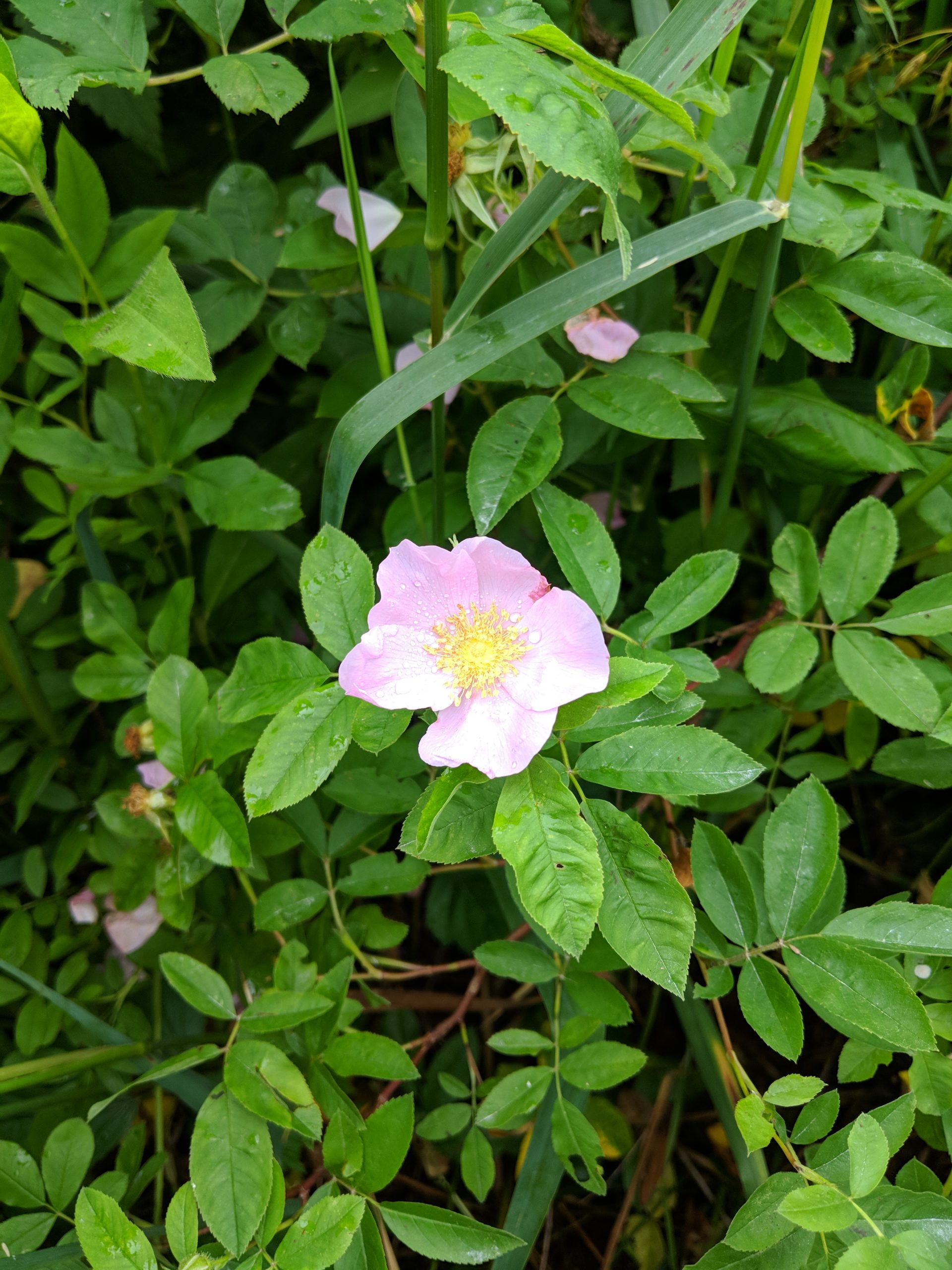
Swamp Rose (Rosa palustris), Freshwater or Non-tidal Wetlands
Bloom Time: June to July
Since we mentioned pink already, we will start with that! Swamp rose is a member of the Rosaceae family, or rose family, which includes a large range of roughly 2,000 species of trees, shrubs, and herbs worldwide. In Delaware, this native can thrive in wetland riparian buffer zones and is usually found in non-tidal marshes, swamps, streambanks, and ditches. The deciduous plant grows quite hefty in size, reaching from 3 feet to 6 feet in both width and height. The flowers are light pink with 5 petals and can grow alone or in small clusters, most notably providing contrast against the green hues of the leaves and stems. Although the flowers are beautiful, be careful before getting too close – like many roses, the stems are very prickly.
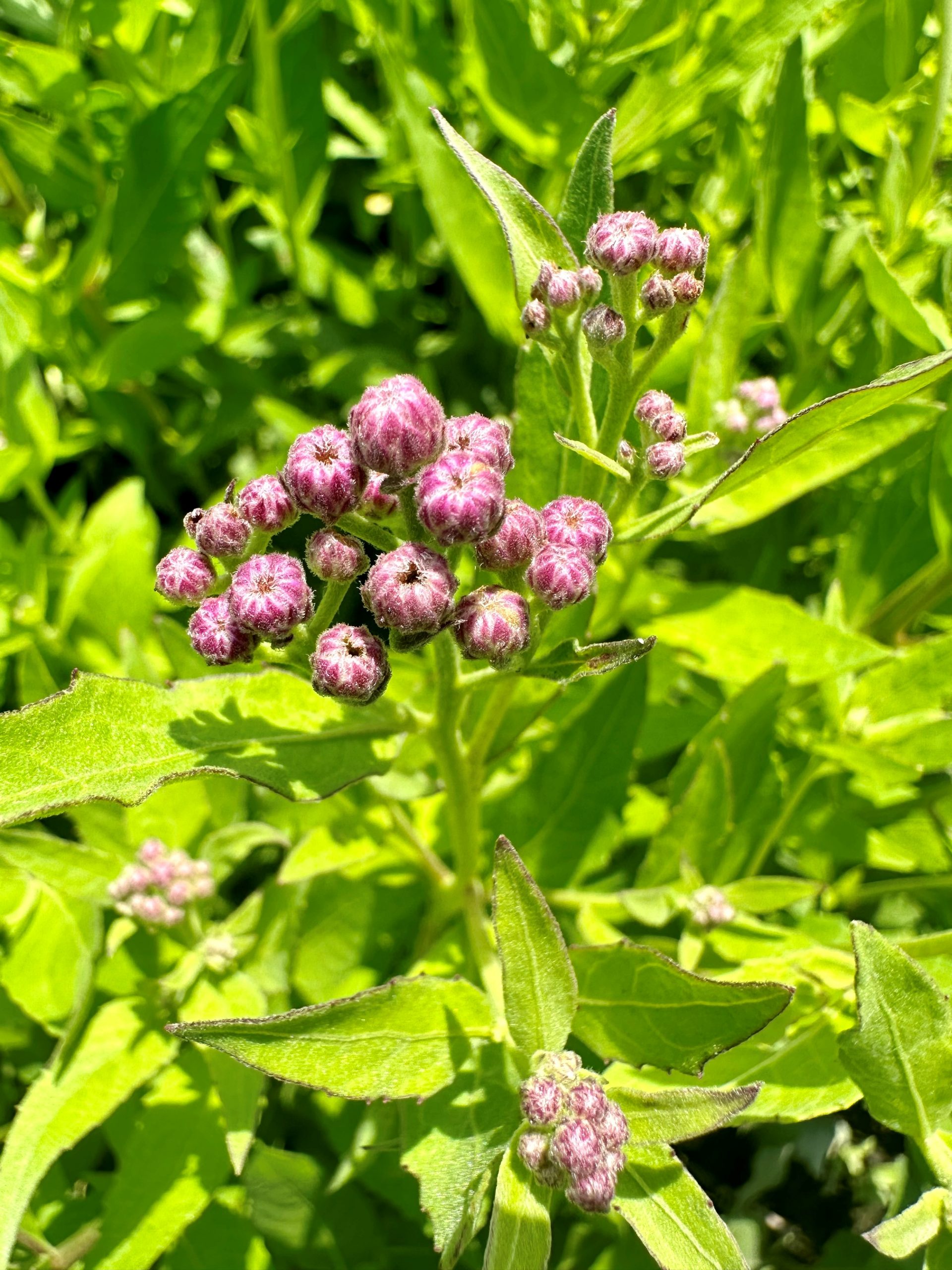
Saltmarsh Fleabane (Pluchea odorata), Tidal Wetlands
Bloom Time: July to October
Our crew loves coming across this fragrant flower in the field. Pluchea is a charming plant that provides a soft look in tidal wetlands with bright green leaves and tiny magenta flowers arranged in rounded clusters. The stems and leaves are covered with tiny hairs making them feel slightly fuzzy or velvety to touch. By late summer, this broadleaf herbaceous species is often abundant in saltwater and brackish water marshes, but hard to notice among the dense vegetation that is in full force during this part of the growing season. Not only does this flower provide a pop of color, but creates foraging habitat for many late season pollinators and has a sweet (and some say funky) pungent scent. During our summer field season, we have consistently seen Pluchea in bloom at our Indian River Near Millsboro Beneficial Use Dredging Project – even in wetland areas currently under restoration.
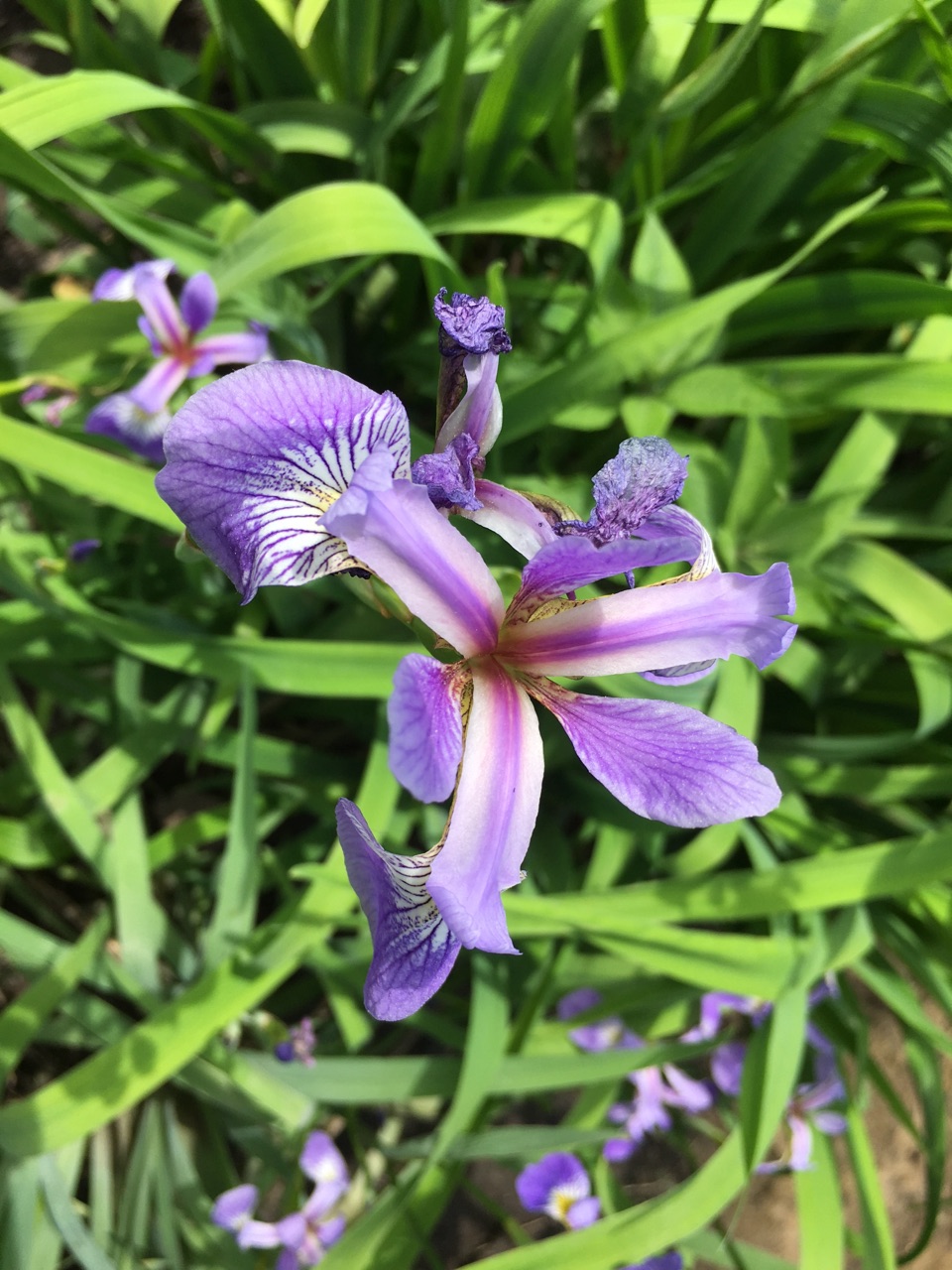
Yellow Flag Iris (Iris pseudacorus), Freshwater or Non-tidal Wetlands
Bloom Time: May to July
Well, we had to throw in a bad guy. Though pretty in color and texture, this species is invasive to both tidal and non-tidal wetlands throughout Delaware. Imported to North America in the early 1700s as an ornamental plant, its propagation as a horticultural species and variety of uses along lakes and ponds expedited its ability to displace native plants. Yellow flag iris is a medium-sized broadleaf herbaceous plant that often forms dense colonies, with the yellowish flowers forming on the end of a roundish stalk. Irises are easily recognized when in bloom because 3 of the petals face upward, while 3 large sepals face downward. How can you avoid this aggressive plant? A great, native alternative for a marshy or wet area is blue flag iris (Iris versicolor). This adaptable species has bright, violet-blue flowers with a butter base that attract helpful pollinators like bees.

Sea Lavender (Limonium carolinianum), Tidal Wetlands
Bloom Time: July to September
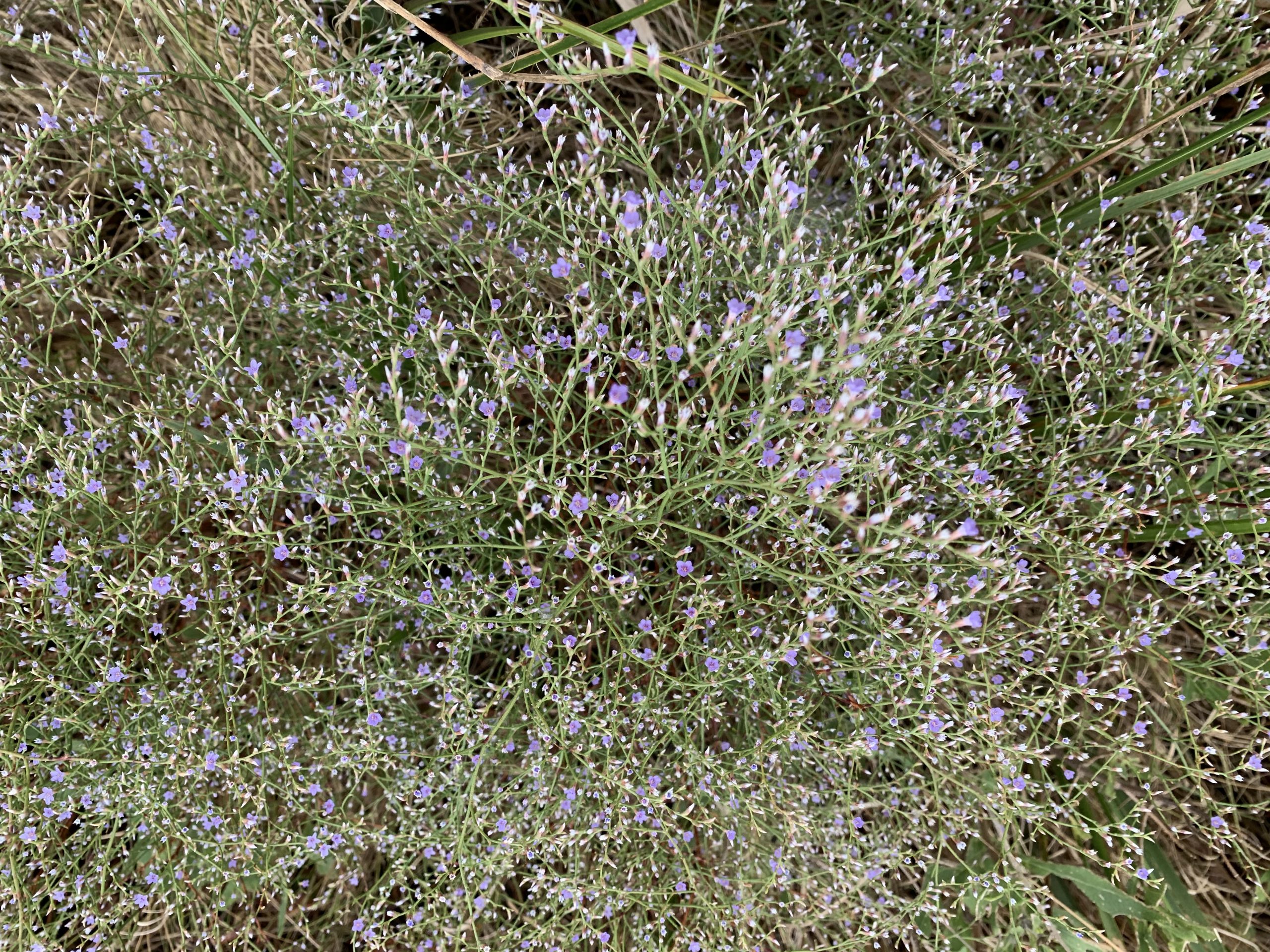
Easy, breezy, beautiful. The tiny flowers of this herbaceous plant can exclusively be seen in tidal wetlands throughout Delaware during some of the hottest summer months. Scattered among the marsh grasses and other broad-leafed tidal plants, this low growing species is harder to notice until it’s right under you. It blooms with blue or pale purple flowers in late summer, adding the coolest splash of color to the saltmarsh. Yet the flowers have no scent at all. Despite its name and papery blooms, it’s not related to true lavender and in fact belongs to the Plumbaginaceae family. As a halophyte, or salt-tolerant plant, it thrives well in tidal wetland conditions and grows right next to quintessential marsh species such as salt meadow hay and smooth cordgrass.
Smooth Beggartick (Bidens laevis), Freshwater or Non-Tidal Wetlands
Bloom Time: June to October
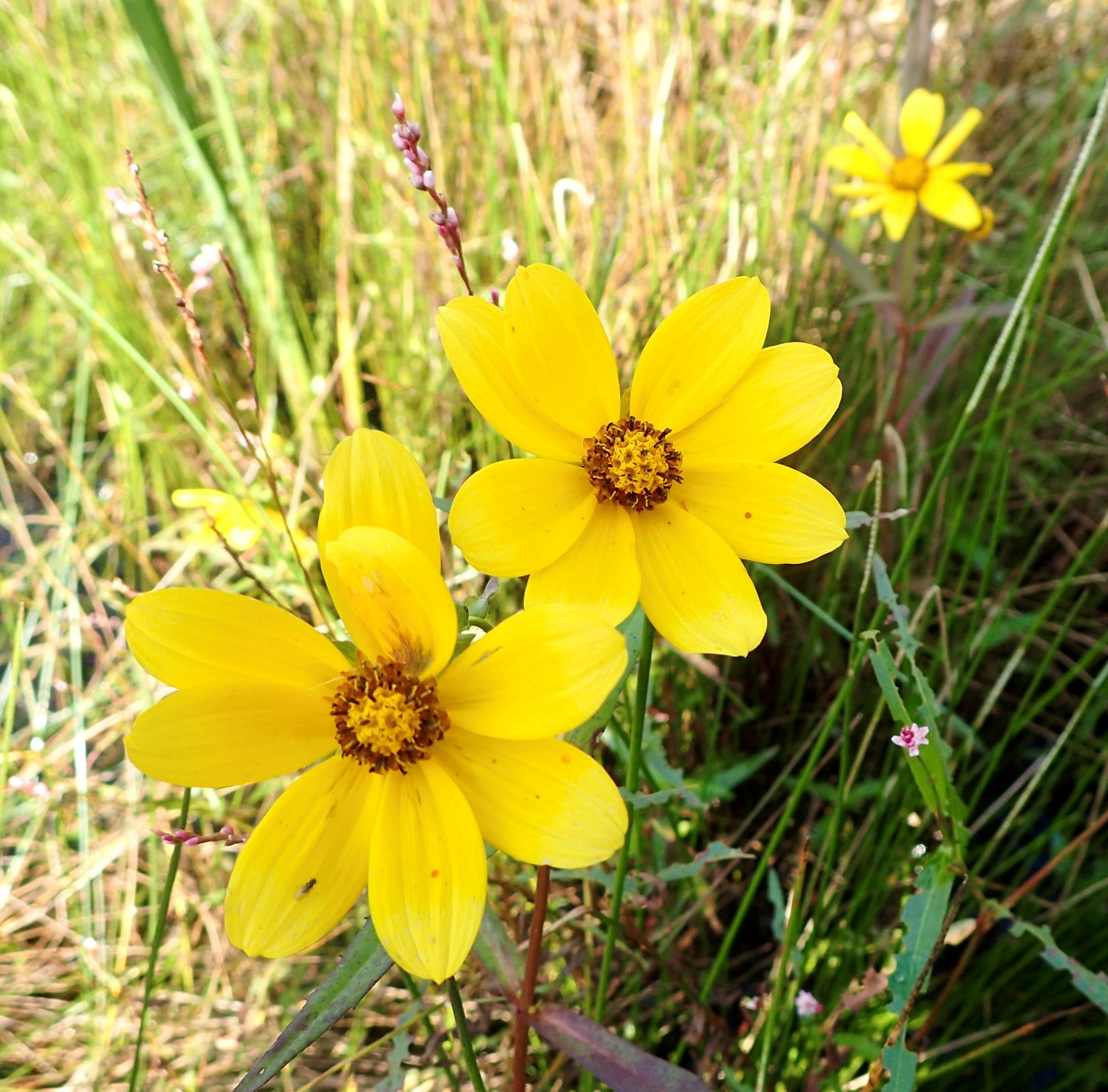
Speaking of sun, this wonderfully yellow fast-growing perennial blooms early summer all the way through the mid-fall. Spotting these flowers is easy due to their size and abundance on the stem itself; the large blossoms have 7-8 petals, and the plant can have one or more flowers on a single stalk. The yellow florets are centered around a brown disc attached to an upright stem growing up to 6 feet tall – a quintessential flower with symmetry and softness sticking up when in bloom. This species can be found near ponds, streams, and wet open woods, but is also a welcome addition to native plants gardens, rain or bog gardens, and homemade ponds. Since smooth beggartick blooms until there is frost in the colder weather, late season pollinators can utilize the flowers as a great resource for pollen and nectar as temperatures start to drop.
Swamp Milkweed (Asclepias incarnata), Freshwater or Non-tidal Wetlands
Bloom Time: June to August
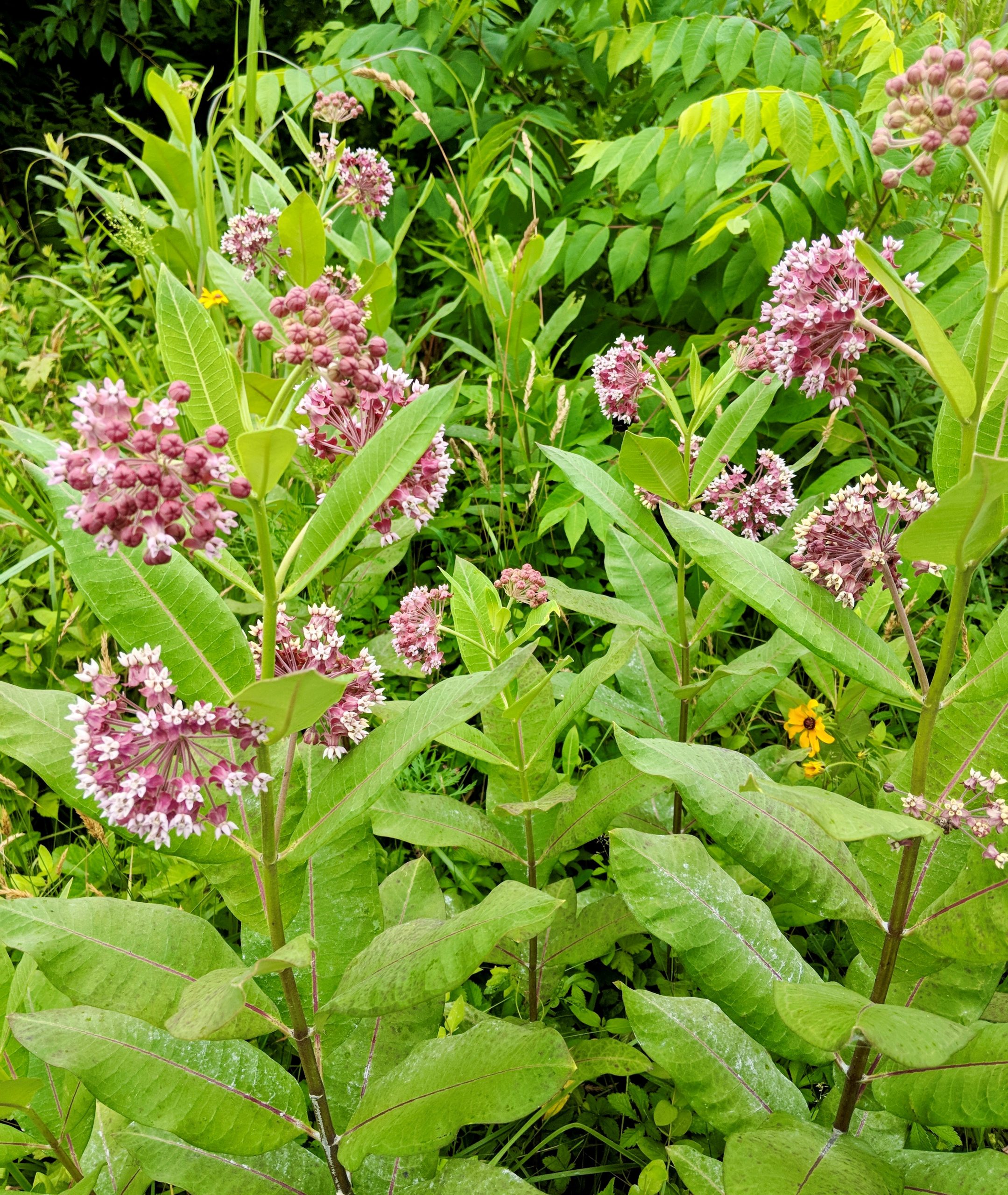
When you hear milkweed in Delaware, it usually is a good thing. There are a variety of species native to our area, and they all represent a critical link between the importance of native plants and biodiversity. Hello, human survival! One of the best things about swamp milkweed is it is easy to grow and can live in an assortment of conditions. These plants enjoy a sunny spot near tidal freshwater marshes, inland shrubs, forest swamps, ditches, and wet meadows – as long as the soil stays wet. Even more exciting, the flowers have a delightful smell and grow in plentiful clusters of purple, pink, or white. Swamp milkweed is an exceptional wetland plant for any level of landscaper or backyard gardener looking to enhance habitat for vital pollinators or simply create stunning focal point with flowers.
Learning about plants, especially wetland species, is not the easiest task. It can be intimidating at times but rewarding when you start to train your eyes to the world around you. Every time our crew is in the field we are gaining knowledge; even the most advanced wetland scientists debate on leaf shape and arrangement. The best way to start learning about the natural world is to see it for yourself and not set expectations. Read when you can, look at resources online, join local nature groups, attend native plant sales – there are so many ways to immerse yourself in the natural world. The few plant species we covered give you an idea of what is out there, so let’s keep it simple for closing out this feature on wetlands in bloom; turn up the volume to a classic.
Written on: May 26th, 2026 in Education and Outreach, Wetland Animals
By Alison Stouffer, DNREC’s Wetland Monitoring and Assessment Program
Take a moment to visualize a wetland scene. Imagine the plants that surround you. Imagine the water that is present. Now imagine the animals that might call this wetland home. Some of the animals you may have envisioned might include birds, muskrats, fish, and turtles – to name a few. However, there are some slender-bodied, scaled, reptile friends that also rely on wetland habitats for food, shelter, and reproduction; snakes! For those who hold a fear of or animosity towards snakes, we bid you farewell and will see you in the next blog post.
While there are 19 species of snakes found throughout the state of Delaware, only a select few can be found in or around wetlands. Before getting into the slippery details of these wetland snakes, take a few minutes to watch this video and familiarize yourself with snake names and terminology.
Common Garter Snake (Thamnophis sirtalis)
Starting off with a widely recognized striped beasty, we have the common garter snake. This snake can live in a variety of habitats but prefers the moist edges of ponds, lakes, and streams. Their semi-aquatic nature allows them to venture into nearby waters to hunt prey such as crayfish, small fish, snails, and amphibians. They also use these waters as quick getaway from snapping turtles, larger snakes, raccoons, and other predators.
Common Water Snake (Nerodia sipedon) and Plain-Bellied Water Snake (Nerodia erythrogaster)
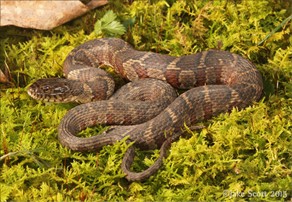
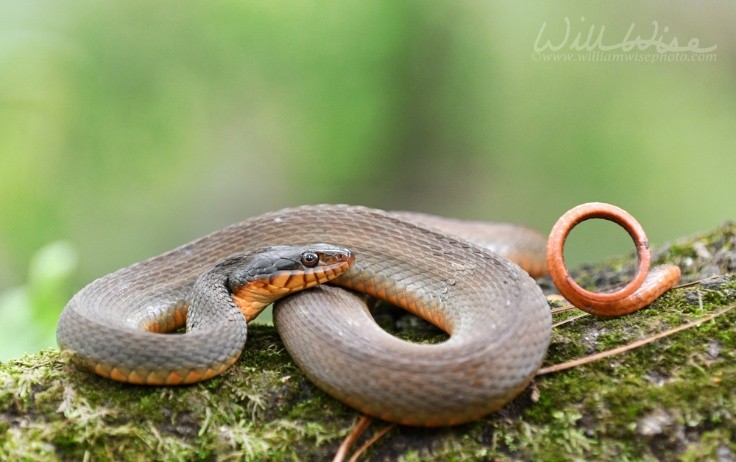
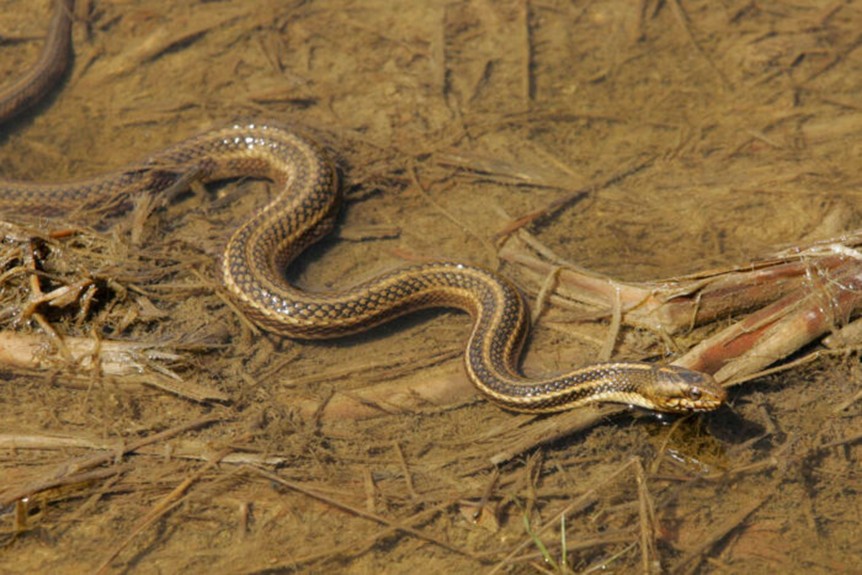
Delaware is home to two species of water snake, the common water snake and the plain-bellied water snake. Both species are semi-aquatic and inhabit freshwater wetlands, with the common water snake even being found in brackish waters. While – as the name suggests – the common water snake is the most common snake seen in these habitats in the Chesapeake region, the plain-bellied water snake is listed as endangered in Delaware. As the only remaining state in the Mid-Atlantic lacking freshwater, nontidal wetland protections, the ecosystems these snakes rely on (i.e. ephemeral ponds, riverine floodplains, etc.) are becoming few and far between as they are lost to anthropogenic activities.
Both the common water snake and plain-bellied water snake use freshwater wetlands to hunt for small fish (as seen in the photo), frogs, toads, salamanders, and crayfish. Like many other semi-aquatic snakes, these two scaled slitherers capitalize on their surroundings to evade predators by diving underwater. Fun fact: the common water snake can remain underwater, without air, for up to one and a half hours!
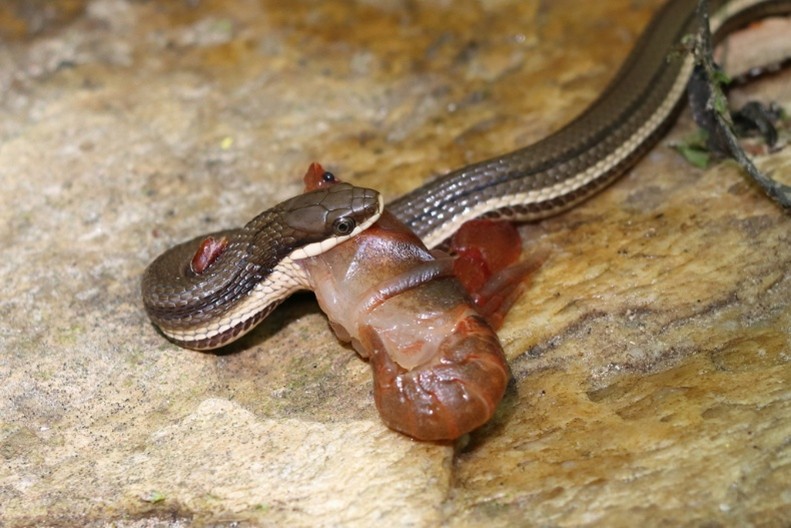
Queensnake (Regina septemvittata)
Moving on to the cutest booper among the wetland snakes (in my personal opinion), the queensnake. These snakes can be found within and along slow-moving streams and rivers with rocky bottoms. Where these habitat requirements exist, so do the queensnake’s favorite snack – crayfish. These snakes rely almost entirely on a diet of crayfish for survival. As a result, when crayfish populations decline, queensnake populations see a decline as well. Some causes of this decline include water pollution, bank erosion, and channelization of streams/rivers.
Rough Green Snake (Opheodrys aestivus)
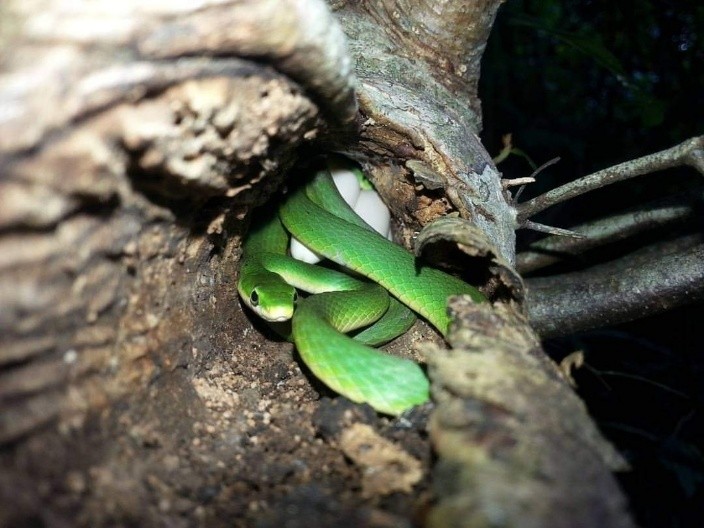
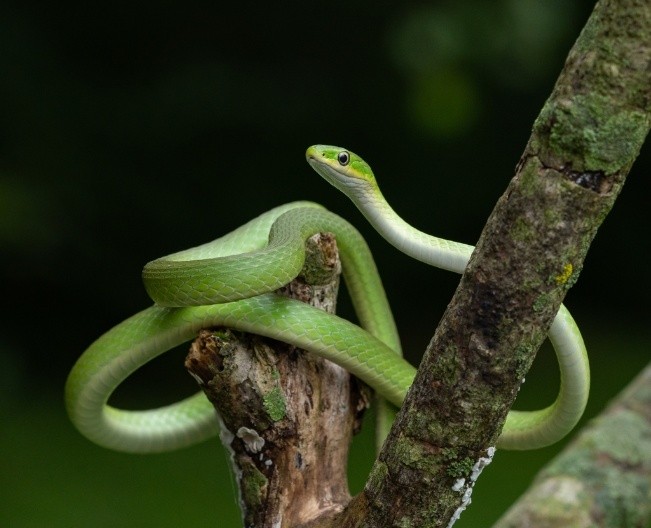
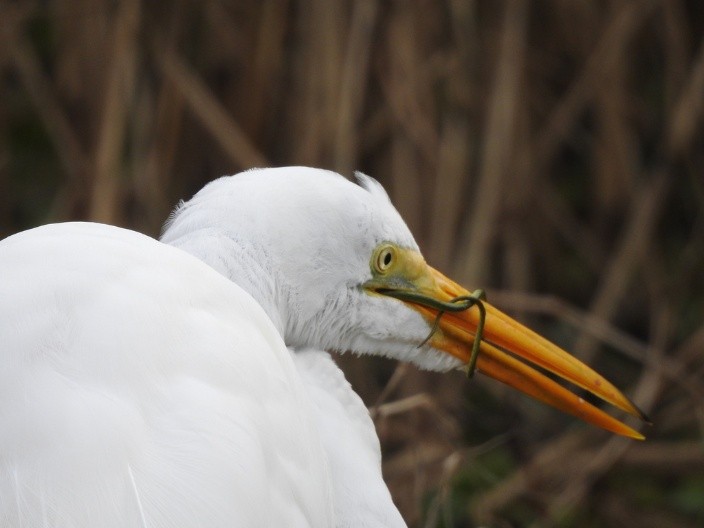
Say hello to the lean, green, not-so-mean machine – the rough green snake! This little cutie is the only tree-dwelling snake in the Chesapeake Bay region and can be found among the branches of trees along the edge of creeks, rivers, ponds, and other wetland habitats. These snakes rely on their green coloring to camouflage into dense vegetation. This behaviors aids in hunting their food, which consists of insects (i.e., grasshoppers, crickets, caterpillars, etc.), snails, spiders, and small frogs. Further, dense vegetation and excellent camouflage skills help the rough green snake to hide from predators. What looks like forbidden spaghetti to the human eye is actually a tasty treat to birds (like the heron in the photo below), larger snakes, and domestic cats.
Eastern Ribbon Snake (Thamnophis sauritus)
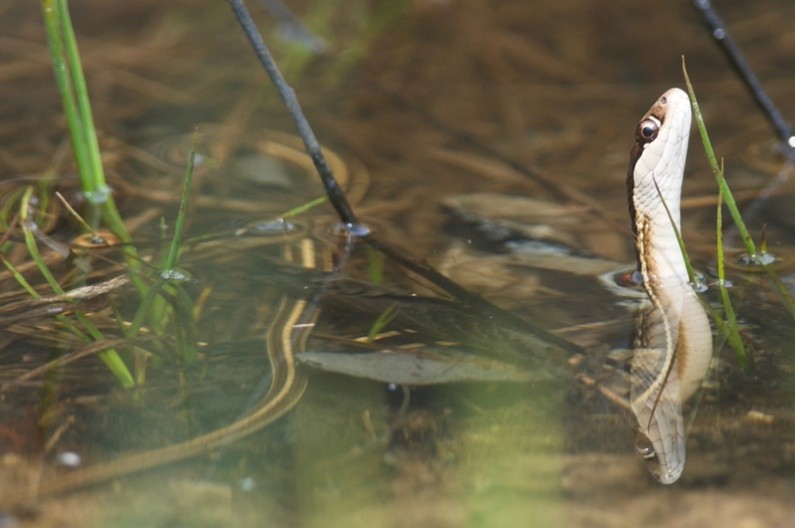
While a common garter snake lookalike, the eastern ribbon snake is, in fact, its own species. However, similar to its near-twin, the eastern ribbon snake is a semi-aquatic species of snake. Within the edges of marsh, bog, and lake habitats, the eastern ribbon snake hunts for small fish and amphibians, particularly frogs and salamanders, that inhabit the same wetland margins. However, the eastern ribbon snake must keep a watchful eye for wetland predators like birds, mink, and racoons.
Redbelly Snake (Storeria occipitomaculata)
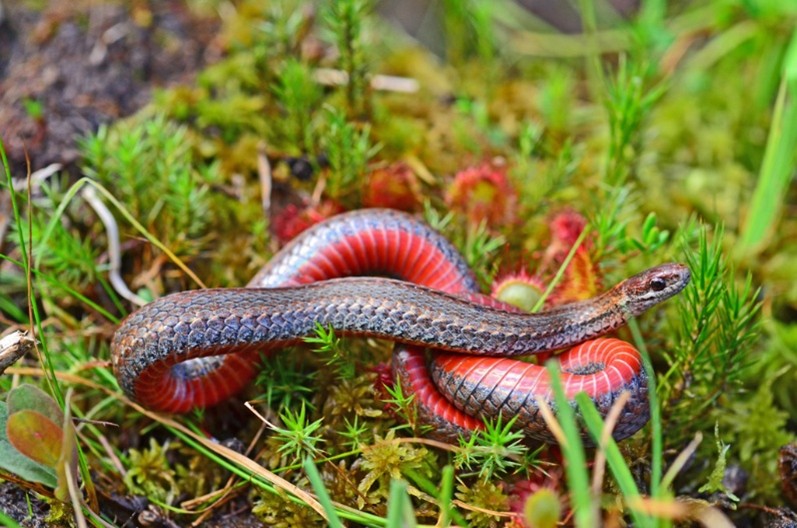
Our final snake of the blog is the redbelly snake – an appropriate name considering its physical appearance. This snake can be found within creek bottomlands and sphagnum bogs where the environment is damp, cool, and moist. Unlike many other wetland-associated snakes, the redbelly snake does not eat fish or amphibians but rather worms, slugs, and snails. With such a specialized diet, these snakes are known to increase feeding behavior in alignment with increased presence of prey, typically following rain events. They have even adapted to their prey’s slimy bodies by using inward curving teeth that help them grasp their dinner.
I hope you have enjoyed a peek into the secretive lives of wetland snakes; I know I sure have. I think snakes, overall, are largely misunderstood creatures. In reality, they just want to enjoy a cozy spot, eat a robust meal (although theirs come from the wetlands), and look at pretty wetlands like the rest of us. And if you enjoyed the photos provided as much as I did, be sure to check out the iNaturalist pages for these snake species, or other species not discussed here. There are some seriously cute nope rope and danger noodle photos out there that will surely brighten your day.
Delaware's Governor
State Agencies
Elected Officials
General Assembly
Delaware Courts
State Employees
Cities & Towns
Delaware State Code
State Regulations
Business First Steps
Phone Directory
Locations Directory
Public Meetings
Voting & Elections
Transparency
Delaware Marketplace
Tax Center
Personal Income Tax
Privacy Policy
Weather & Travel
Contact Us
Corporations
Franchise Tax
Gross Receipts Tax
Withholding Tax
Delaware Topics
Help Center
Mobile Apps
E-mail / Text Alerts
Social Media


Built by the Government Information Center
©MMXVIII Delaware.gov

