Facebook Twitter Instagram YouTube

Written on: March 20th, 2026 in Education and Outreach, Natural Resources
By Tyler Dreiblatt, DNREC’s Division of Parks and Recreation
We humans often have a hard time understanding the value of our natural resources. Unless something is pretty or has an obvious use, we tend to ignore it. Take the salt marshes surrounding Burton Island. Once dismissed as a dirty breeding ground for mosquitos, they are now recognized as some of the most ecologically important lands that we have.
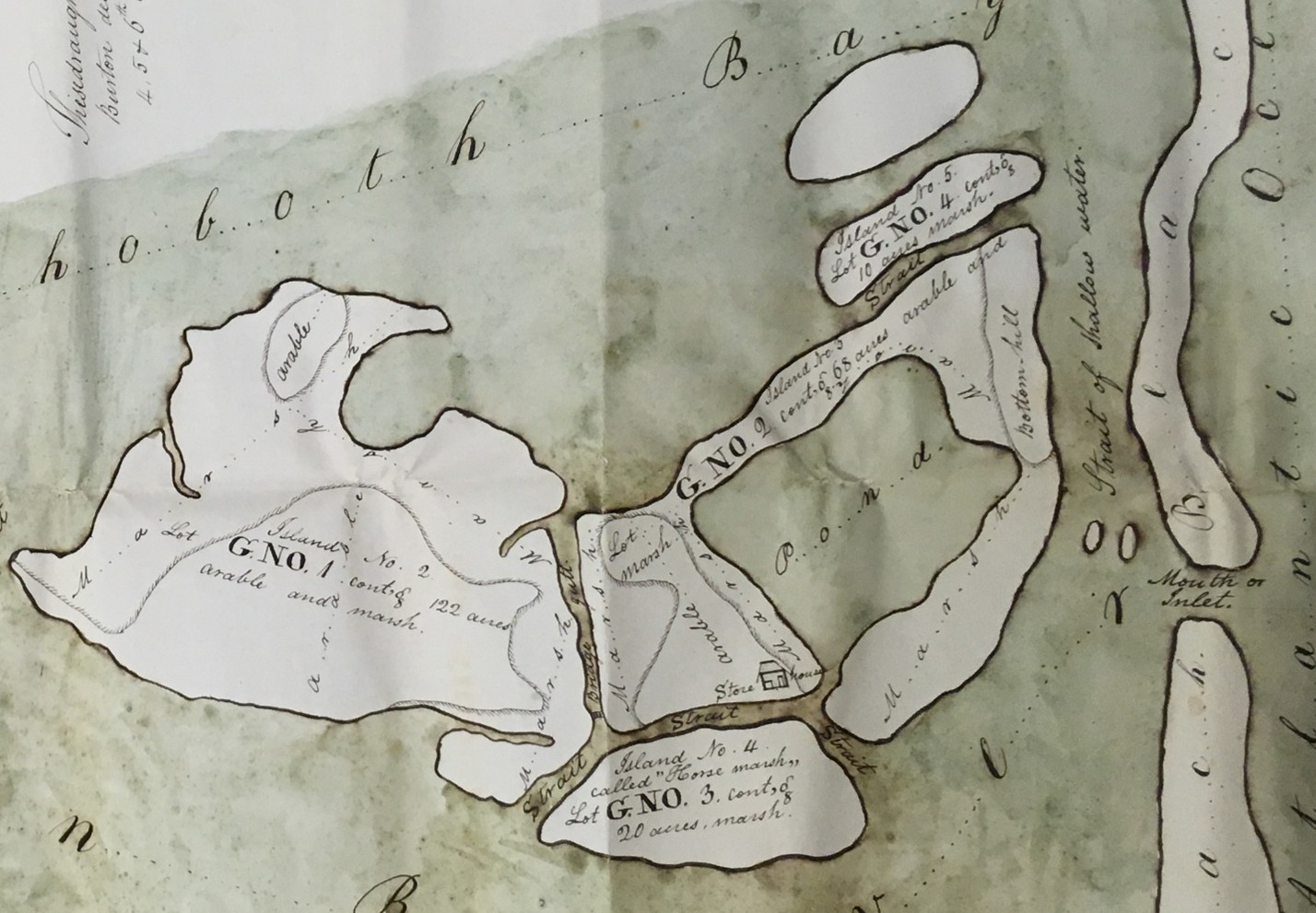
The first European claimant to Burton Island was William Burton, a wealthy landowner who acquired the area in 1677. It is from his family that the island gets its name. Generations of Burtons grew crops and kept livestock on the island, but they don’t seem to have cultivated it too intensely. A map from the 1840s gives us a clue as to why: almost half of the area was untillable marshland.
The island stayed in the Burton family until 1875 when Serene Burton married Charles Lingo 1. The Lingos were a well-off family with land of their own, and had no need for a small, marshy farm 2. In 1884 Charles and Serene sold the island to Garrett V.W. Eldert, a businessman who already owned four successful hotels and a restaurant in New York 3. He built a small hotel on the island and organized hunting and fishing trips for wealthy clients. It was known as the New York Club until 1902, when it was taken over by the Sport Royal Club of Philadelphia. By the 1920s the club was no longer profitable. Burton Island changed hands once again, bought this time by Philadelphia businessman Linford P. Faucett 4.
By the 1930s the federal government began to turn its attention to mosquito control. Not only is their bite annoying, but some species can carry diseases like malaria. The Civilian Conservation Corps (CCC) was put to work digging thousands of miles of ditches to drain the wetlands where mosquitos bred 5. This plan did reduce mosquito populations in some areas. Along our coast, however, the ditches created unexpectedly negative changes.
What we failed to realize then was just how important marshes are to both wildlife and human beings. 80% of the breeding bird population in the U.S. relies on wetlands. The same is true for more than 95% of the fish and shellfish we eat in this country 6. Marshes slow and absorb storm water, both reducing flood damage and filtering out harmful pollutants. Salt marshes like those surrounding Burton Island are particularly good at sequestering carbon, locking it in fast-growing but slow-decaying plants like salt meadow hay 7.
Marshes can even be a source of fresh water. When it rains, the lighter fresh water floats on top of heavier salt water. Eventually this can create a natural pool called a “seep.” Seeps at Burton Island provide an important water source for herons, muskrats, frogs, and more 8.
As the ditching continued, the marshes began to decay. Numerous species struggled as their food and shelter disappeared and their water dried out. A striking example comes from “Delaware: A Guide to the First State.” The authors write of Burton Island: “the shallow flats nearby were famous for the great numbers of soft-shell crabs found in the grass that used to grow on the bottom but has since disappeared…the lack of vegetation causes a dearth of small marine life which supplies their food.” 9 This was published in 1938, just a few years after the digging had started.
The 1950s and 1960s also brought more people to the Delaware coast. The Faucett family leased much of Burton Island to the Indian River Yacht Basin marina, which further sublet the land. Eventually there were over 300 seasonal occupants. Unrestrained use of the island only increased pressure on the local ecosystem.
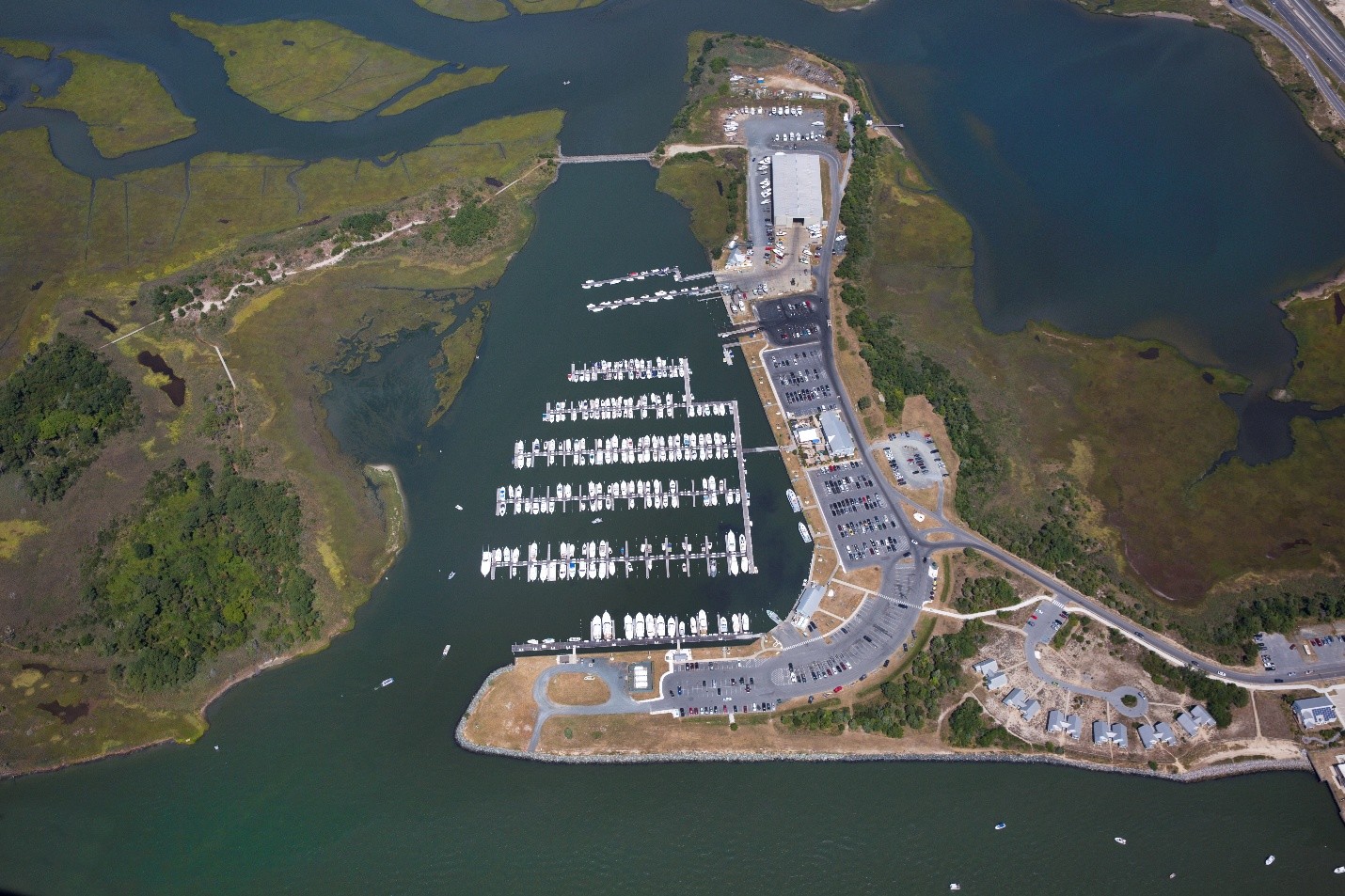
The slow work of repairing these marshes began in 1971 when the State of Delaware bought Burton Island from the Faucetts and added it to Delaware Seashore State Park. Usage was restricted to fishing, picnicking, and boating. 10 In 1981 the old ditches were largely plugged, with certain ditches left connected to marsh ponds. This provides habitat for mosquito-eating fish while also allowing water to move through the environment more naturally. 11 In 2004 the state formally recognized what an ecological treasure Burton Island is and designated it as a state nature preserve. 12 This is the highest protected status that a natural area in Delaware can receive.
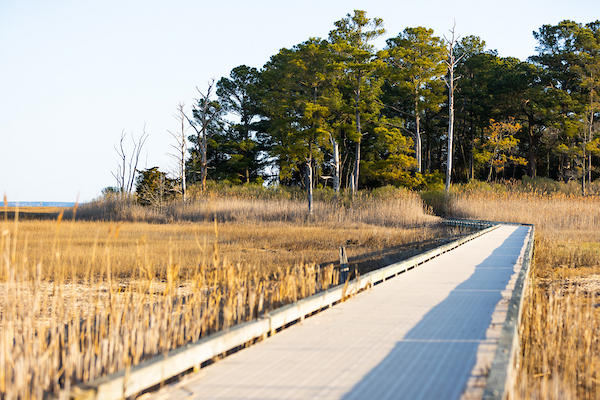
Today, Burton Island is a wonderful place to see how much life is packed into a salt marsh. A 1.2-mile trail begins behind the Indian River Marina and takes visitors past fiddler crabs teeming below the boardwalk, mergansers cruising the water, and muskrat paths snaking through the reeds. Plan your visit for colder months- mosquitos, ticks, and other pests can make hikes challenging in warm weather. If you do go during the summer, let the mosquitos remind you how much our perception of the area has changed. Burton Island in the 1800s was a muddy, unwanted farm. For most of the 1900s, the marshes were a nuisance that needed to be drained. Now we finally see how important they are for wildlife and human life.
Delaware's Governor
State Agencies
Elected Officials
General Assembly
Delaware Courts
State Employees
Cities & Towns
Delaware State Code
State Regulations
Business First Steps
Phone Directory
Locations Directory
Public Meetings
Voting & Elections
Transparency
Delaware Marketplace
Tax Center
Personal Income Tax
Privacy Policy
Weather & Travel
Contact Us
Corporations
Franchise Tax
Gross Receipts Tax
Withholding Tax
Delaware Topics
Help Center
Mobile Apps
E-mail / Text Alerts
Social Media


Built by the Government Information Center
©MMXVIII Delaware.gov

